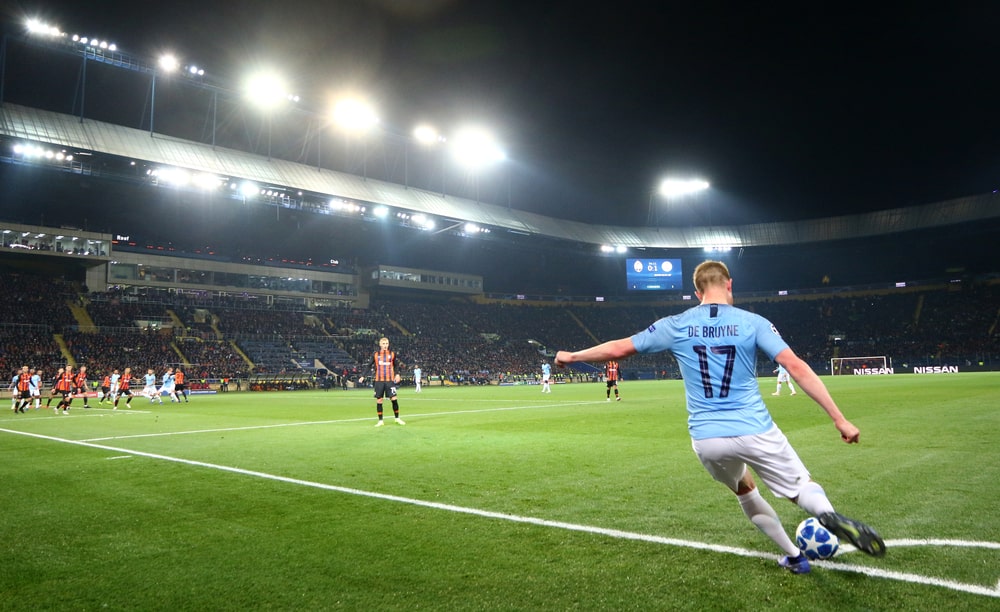
What is a corner kick? It is one of the most familiar set-piece situations in football. Every corner kick can create a scoring opportunity if the attacking team has a well-organized approach. Although corner kicks occur frequently, not every fan fully understands how they are awarded, taken, and handled.
For those who regularly watch football on xem Xôi Lạc, corner kicks are certainly nothing new. Even a seemingly simple play near the goal line can lead to a dangerous opportunity in front of the goal.
What is a corner kick in football?
A corner kick is awarded when the ball completely crosses the goal line outside the goal and the last player to touch it is a member of the defending team. The attacking team is then awarded a kick from the corner area of the pitch.
This is a set-piece situation taken from the corner arc nearest to where the ball went out of play. The player taking the kick can pass the ball short to a teammate or deliver it directly into the penalty area.
One special feature of a corner kick is that the attacking team can proactively develop various strategies. An accurate cross can create an opportunity for a teammate to head the ball, take a shot, or capitalize on a second-ball situation.
When watching football on Xôi Lạc TV, fans can easily see that teams with strong corner-kick routines often put considerable pressure on their opponents.

When does the referee officially award a corner kick to the attacking team?
To understand what a corner kick is, it is first necessary to know the conditions under which one is awarded. According to the Laws of the Game, a corner kick is awarded when the ball completely crosses the goal line without entering the goal and the last player to touch it is a member of the defending team.
For example, a defender may clear the ball over the goal line to prevent an opposing striker from taking a shot. If the ball crosses the goal line outside the goal, the attacking team is awarded a corner kick.
Conversely, if an attacking player is the last to touch the ball before it crosses the goal line, the defending team is awarded a goal kick instead of a corner kick.
This is an important detail because a single final touch can determine which team gains the advantage in the next phase of play.
How to take a corner kick according to the Laws of the Game
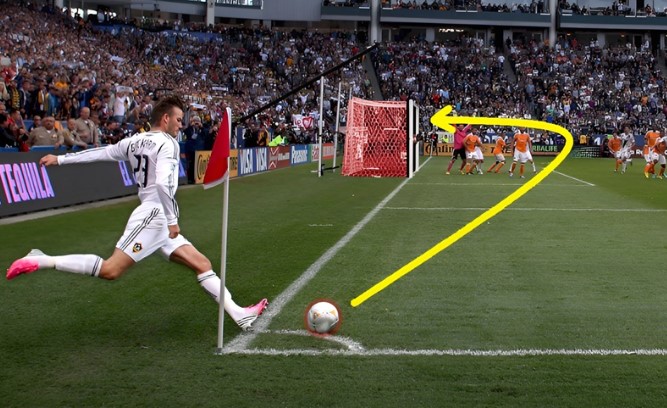
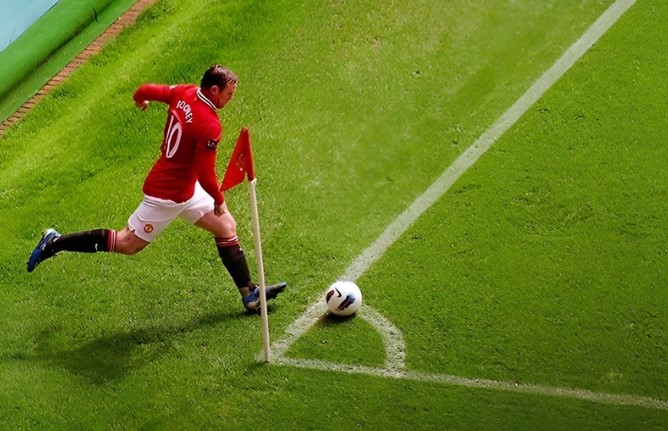
A corner kick is taken from the corner area corresponding to where the ball went out of play. The player taking the kick must place the ball within the area bounded by the corner arc.
During the execution, the player can choose from several options. The most common approach is to deliver a high ball into the area in front of the goal, allowing teammates to use their aerial ability.
Another option is to play a low ball or make a short pass to a nearby teammate. This approach allows the attacking team to change its angle of attack and stretch the defensive formation.
Some teams also develop specialized corner-kick routines. They may position a player to make a run across the front of the goal, create space at the near post, or send the ball back to the edge of the penalty area for a shot.
Those who regularly visit Xoilac Tivi have surely witnessed such carefully rehearsed corner-kick combinations.
Rules players must follow when taking a corner kick
A corner kick cannot be taken arbitrarily. The ball must be placed correctly within the corner area and kicked by a player from the team awarded the corner.
The ball is in play when it is kicked and clearly moves. The player taking the corner must not touch the ball a second time before it has touched another player.
Defending players must maintain the required distance when the kick is taken. However, unlike some other free-kick situations, corner kicks often allow numerous players to move inside the penalty area, making defending more complicated.
Following kqbd hom qua can also help fans recognize how significantly corner kicks can influence the course of a match, particularly when the two teams are evenly matched.
Common corner-kick strategies
In modern football, corner kicks are regarded as a tactical puzzle. Attacking teams can use various approaches to create space.
The first option is to deliver the ball toward the near post. A player with strong jumping ability moves into position to head the ball toward goal or redirect it backward to a teammate.
The second option is to aim for the far post. This approach works well when the attacking team has tall players with strong aerial abilities.
Teams can also take short corners. Two players combine near the corner area to draw one or two defenders away from their positions before delivering the ball into the penalty area.
When xem Xôi Lạc, observing how different teams execute these strategies will help viewers better understand the tactical thinking behind football.
Conclusion
Hopefully, the information above has helped you understand what a corner kick is and why this set-piece situation plays an important role in football. From the conditions for awarding one and the rules for taking it to the tactical approaches involved, every corner kick can become a turning point in a match.
If you love football and want to follow exciting moments on the pitch, you can watch Xoilac Live to keep up with notable matches. In addition, following kqbd hom qua can help you review match developments, assess attacking effectiveness, and evaluate the chances each team creates from set pieces.
In particular, when xem Xôi Lạc, pay attention to how teams position their players inside the penalty area. You will realize that behind a seemingly simple corner kick lies an entire tactical system that has been carefully planned.